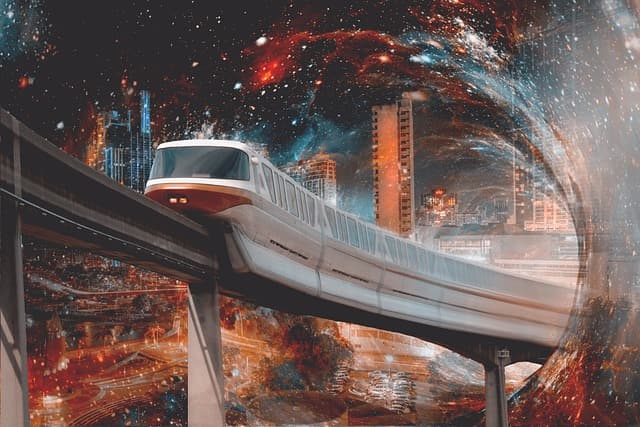
New train control technologies enable increased railway capacity and energy savings. This is reported by the railway magazine Railway Supply.
The development of driverless technologies in railway transport has a long history. Active testing of driverless trains was conducted in a number of countries as early as the late 1940s. The first prototypes of automatic train drivers for suburban trains appeared abroad in the mid-1960s, for example, in San Francisco (USA).
Today, driverless passenger trains operate in 20 countries around the world. The top ten longest driverless railway lines include cities such as Dubai (80 km), Vancouver (68 km), Singapore (65 km), followed by Lille, Busan, Paris, Kuala Lumpur, Toulouse, and then Taipei and Tokyo (25 km each). In Paris, for example, there is a special metro line on which automatically controlled trains run between Orly Airport and the Antony express metro (RER) station on line B. Approximately 2.5 million passengers are transported annually. Each train consists of two cars running on rubber tires. They were developed by Matra in 1971 and first put into service in the city of Lille.
Vancouver has a light rail system called SkyTrain. It is the world’s longest fully automated rapid transit system. Another example of the implementation of such technologies is the Copenhagen subway. It is unique in that there are no drivers on the subway trains, and control is provided by a fully automated ATC system that ensures precise control of the distance between trains.
The first driverless train in the UK will run between Peterborough and Horsham, near London. The project was initiated by the British company Thameslink Railway, which operates the railway of the same name. Automated operation using a new digital signaling system will allow a much larger number of trains to pass through congested tracks in central London, enabling an additional 60,000 passengers to be transported daily during rush hour. However, despite full automation, there will still be a driver in the cab — he will monitor the operation of the automatic system and open and close the doors for passengers. Before launching the project, the developers tested it for a year and a half. Overall, work on the launch of the driverless train took about five years and cost £7 billion (about €8 billion).
In recent years, there has been growing interest in the introduction of driverless technologies in freight rail transport.
Last year, Anglo-Australian industrial company Rio Tinto successfully completed trials of autonomous freight trains. The trains, which were remotely controlled by specialists, traveled approximately 100 km. This is an important milestone for the AutoHaul project, which began in late 2018. Rio Tinto is one of the world’s largest iron ore exporters. In Pilbara, it has a 1,700 km railway network and about 200 locomotives that transport iron ore from 16 deposits to four port terminals. Rio Tinto sees the advantages of AutoHaul in increased train speeds and fewer stops, which has reduced the average travel time by more than an hour. Transportation safety is also expected to improve thanks to the automatic response of driverless locomotives to emergency lights and speed limits. The company’s ultimate goal is to create the world’s first fully autonomous long-distance mainline railway network.
The French company Alstom is also developing an unmanned freight train in collaboration with the Dutch companies ProRail and Rotterdam Rail Feeding. Alstom began developing train automation systems back in the 1970s. The company improved the subway cars of the countries to which it supplied its products. Subsequently, the plant automated ground transportation as well. For example, an automation system was installed in Paris commuter trains. However, before creating a full-fledged driverless freight train, specialists had to take into account several important points — the integration of autonomous trains into existing railways, the possibility of sudden changes in weather conditions, and the occurrence of unforeseen situations. For example, dangerous actions on the part of drivers of other vehicles. According to the developers, driverless trains will save energy and allow for more accurate adherence to the timetable. The first automated line is planned to connect the port of Rotterdam with the CUP Valburg station in the east of the Netherlands. On this section, the train will travel 100 kilometers without the assistance of a driver.
Driverless freight and passenger trains reduce travel time by increasing average and maximum speeds and eliminate the possibility of accidents due to driver fatigue. Currently, trains can sometimes deviate significantly from their schedules, creating the possibility of disruptions and even transport collapse on the railway line. Thanks to the use of a central control node with artificial intelligence, such situations are unlikely.
Technologically, the unmanned train control system is developing in two main directions. On the one hand, there is the autopilot, which is installed in the train itself. On the other hand, there is the “smart” infrastructure that helps the train move without a human. The implementation of these technologies has a tangible effect. With the implementation of driverless technologies, the number of service personnel is reduced by 40-50%, and the volume of traffic increases due to the rational use of rail transport. New train control technologies make it possible to increase the carrying capacity of railways and save energy resources. They significantly facilitate the work of train drivers, improve traffic safety, and contribute to the innovative development of the industry.