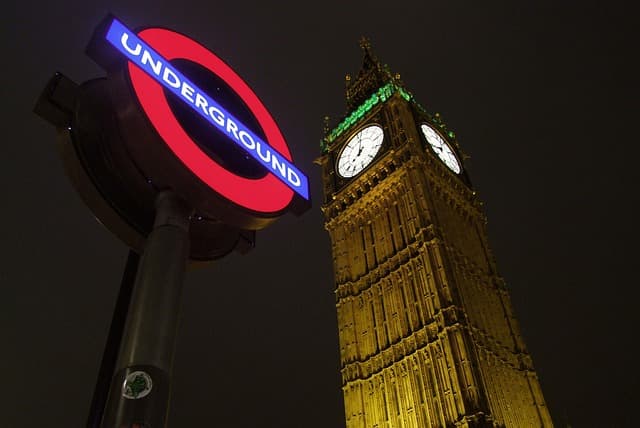
The London Underground is a unique underground construction project. As the world’s first underground railway, it remains a leader in terms of development.
The tunnel under the Thames
Twenty years before the history of the underground began, Sir Marc Brune and his famous son Isambard built a tunnel under the Thames – the world’s first underwater tunnel. The method they used was very similar to that used for digging coal mines. However, the tunnel did not require major repairs until the 1990s, i.e. only 100 years later. Initially, the tunnel was intended for pedestrians and horse-drawn transport, but at the end of the 19th century, it became part of the London Underground system.
The history of the London Underground
The history of the London Underground began on January 9, 1863, when the first train ran between Paddington and Farringdon Street. To build this section, the open tunnel construction method was used: the streets along the subway route were dug up, a brick tunnel was built, and then the street pavement was returned to its place. By Christmas 1868, the Metropolitan District Company had opened a line between Westminster and South Kensington (now part of the District and Circle lines). From that moment on, construction did not stop, and engineers sought new solutions and opportunities for the expansion and development of the underground.
In 1869, the first trains ran through the tunnel under the Thames. 1890 marked the electrification of the first subway lines. Twelve years later, the London Underground Electric Railway Company, known as the Underground Group, was founded. In 1905, the District and Circle lines were electrified, and a year later, stations such as Baker Street and Waterloo Railway opened, which currently function as major transfer hubs in the modern London Underground.
One of the first London Underground stations
However, the now world-famous name “Underground” and the famous London Underground logo first appeared at stations only in 1908. The first escalator was installed in 1911 at Earl’s Court station. In 1931, the famous London Underground map, or “diagram,” was created by Harry Beck.
It is to him that we owe the appearance of the model that is still used in almost all metro systems around the world. Before that, metro maps were always tied to a map of the area, which resulted in stations in the center overlapping each other, while stations on the outskirts were missing altogether.
London Underground map
In 1905, the District and Circle lines were electrified, and a year later, stations such as Baker Street and Waterloo Railway opened, which currently function as major transfer hubs in the modern London Underground. However, the now world-famous name “Underground” and the famous London Underground logo first appeared at stations only in 1908.
During World War II, the “Tube” served as a shelter during air raids. Part of the Piccadilly line from Holborn to Aldwych station was closed and used to store exhibits from the British Museum. After the war, the underground was reorganized, renovated, and improved. By 1975, the rolling stock had been completely replaced, steam locomotives had disappeared for good, and the existing lines had been significantly expanded.
In 1977, the Queen opened Heathrow Central underground station, connecting three of the five terminals of Europe’s largest airport to central London via the Piccadilly line. By 2008, all airport terminals were connected to the underground. The London Underground continues to develop actively, with new stations constantly opening, old lines being extended, and new ones being introduced.
After passenger numbers exceeded 1.1 billion per year in 2011, London authorities deemed it necessary to implement one of the most ambitious projects in Europe – the Crossrail transport system, which will connect the historic city center with business districts. It will increase passenger traffic and the capacity of London’s railway lines by an average of 10%.